

Open Source Intelligence (OSINT) is key in cybersecurity, especially in the reconnaissance phase of penetration testing. It uses public info to get important data about a target’s security.
The success of penetration testing depends a lot on the reconnaissance phase. OSINT finds weak spots, spots exposed sensitive info, and shows the attack surface of an organization.
As cybersecurity keeps changing, the role of OSINT is more important than ever. It helps find security weaknesses early. This lets organizations fix their defenses before bad guys can use them.
Key Takeaways
- OSINT is crucial for effective penetration testing.
- Open source intelligence helps identify potential vulnerabilities.
- Cybersecurity OSINT enhances the reconnaissance phase.
- OSINT provides a proactive approach to security testing.
- It helps organizations strengthen their defenses.
The Fundamentals of OSINT in Penetration Testing
OSINT is key in penetration testing. It helps understand an organization’s security. OSINT uses public sources to gather this information.
Defining Open Source Intelligence in Cybersecurity
OSINT collects info from public places like social media and websites. In cyber, it helps find threats and weaknesses. It shows how secure an organization is.
Why Reconnaissance Matters in Security Assessments
Reconnaissance is vital in testing. It helps find out about a target’s systems and people. This info helps find weak spots and plan attacks.
Legal and Ethical Boundaries for OSINT Activities
OSINT must follow laws and ethics. This means respecting privacy and not breaking into systems. All info must be public and legal.
Knowing about OSINT helps organizations get ready for security checks. It makes their cyber security stronger.
The Reconnaissance Phase Explained
The reconnaissance phase is key in penetration testing. It sets the stage for a thorough security check. This phase collects info about the target system or network. This info helps spot possible weaknesses.
Passive vs. Active Information Gathering
There are two ways to gather info in this phase. Passive information gathering means getting data without touching the target. This can be through social media or public databases. Active information gathering involves direct contact with the target. This can be through network scans or DNS queries.
The Intelligence Collection Lifecycle
The intelligence collection lifecycle is vital in the reconnaissance phase. It covers planning, collecting, processing, and analyzing data. This ensures the data is right and useful for finding vulnerabilities.
Establishing Scope and Objectives
Before starting, it’s important to know what to do and why. You need to decide what info to get, how to get it, and what you want to achieve. This helps keep the focus sharp and the efforts effective.
Essential OSINT Frameworks and Methodologies
Good penetration testing needs strong OSINT frameworks and methods. These help gather and study open-source info. This makes it easier for testers to mimic real attacks.
The OSINT Framework Approach
The OSINT Framework is a clear plan for getting, analyzing, and sharing open-source info. It helps testers find weak spots and ways in for an organization’s digital presence.
Intelligence Analysis Models for Penetration Testers
Intelligence models are key for testers to understand the data they collect. The OSINT Cycle and Intelligence-Led Testing help sort findings. They spot patterns and plan attacks.
Digital Footprinting Techniques
Digital footprinting is key in OSINT. It’s about finding and studying an organization’s online presence. This includes looking at organization footprinting and individual target profiling.
Organization Footprinting
Organization footprinting maps out an organization’s digital setup. It looks at domains, subdomains, and network areas. Tools like DNS enumeration, web scraping, and social media monitoring are used.
Individual Target Profiling
Individual target profiling digs into info on specific people in an organization. It checks social media, professional networks, and online actions. This helps find phishing targets or insider threats.
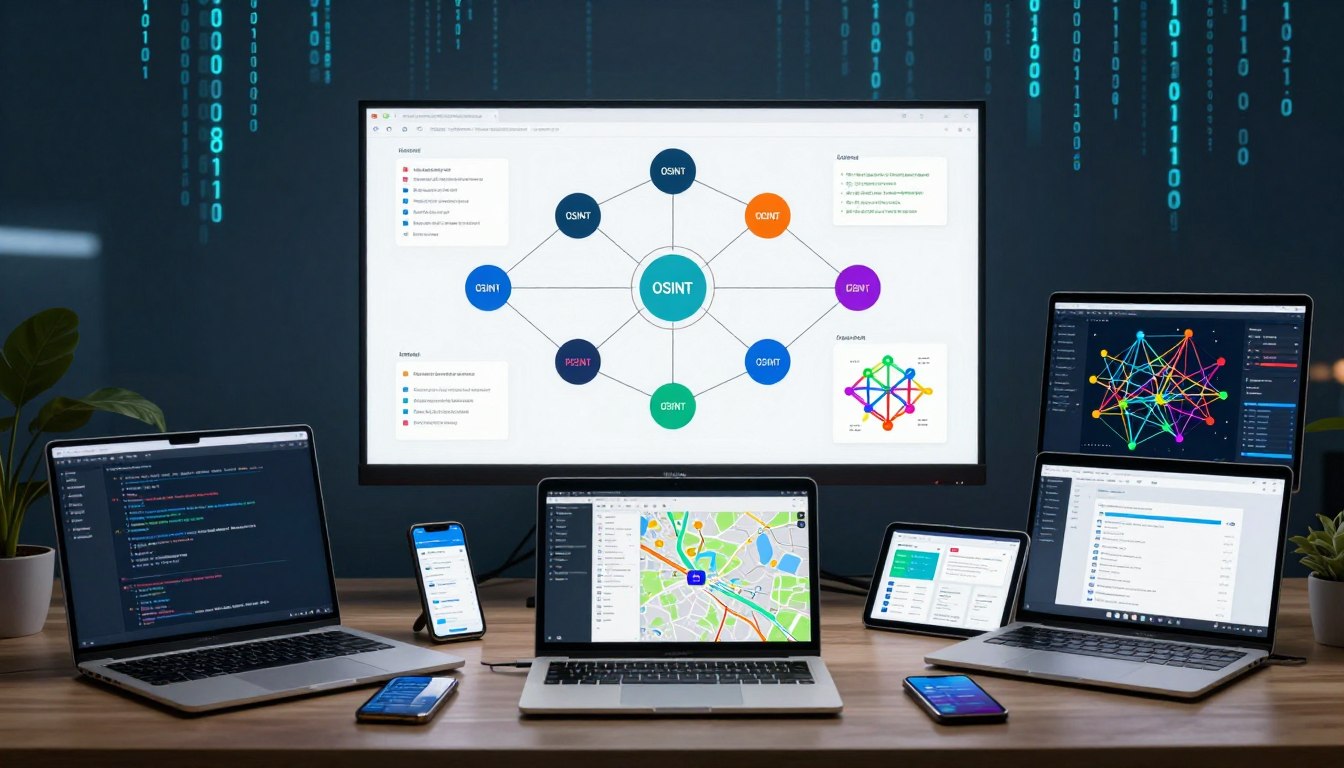
| OSINT Technique | Description | Example Tools |
|---|---|---|
| DNS Enumeration | Identifying domain name system records | Dig, DNSRecon |
| Social Media Monitoring | Tracking social media activity | Hootsuite, Brand24 |
| Web Scraping | Extracting data from websites | Scrapy, Beautiful Soup |
Using these OSINT tools, testers can make security checks better. They give organizations important info on their cyber risks.
Practical OSINT Tools for Penetration Testing
Professionals use many OSINT tools for penetration testing. These tools help gather info on domains, networks, and people.
Domain and Network Reconnaissance Tools
Domain and network reconnaissance is key in penetration testing. Tools like Maltego and Shodan help find info on domains, IP addresses, and networks.
- Maltego is a big help for network reconnaissance. It shows what’s in the network and possible weak spots.
- Shodan is like a search engine for devices online. It helps find devices and services that are open to the internet.
Social Media Intelligence Platforms
Knowing what’s online about a company or person is important. Tools like Hootsuite and Sprout Social help watch social media.
- Hootsuite lets you watch many social media sites at once. It shows what’s being posted and who’s talking to whom.
- Sprout Social gives you stats and lets you keep an eye on social media. It helps see what a target is doing online.
Metadata Extraction and Analysis
Metadata extraction is a strong way to find hidden info in files. It looks at metadata to find out where files came from and who changed them.
Document Metadata Tools
Tools like FOCA (Fingerprinting Organizations with Collected Archives) pull metadata from documents.
- FOCA can get metadata from different kinds of documents. It shows who made the document, when it was changed, and who owns it.
Image and Geolocation Analysis
Looking at images and where they were taken is another important task. Tools like ExifTool are great for this.
- ExifTool pulls EXIF data from images. It shows things like the camera used, GPS info, and more.
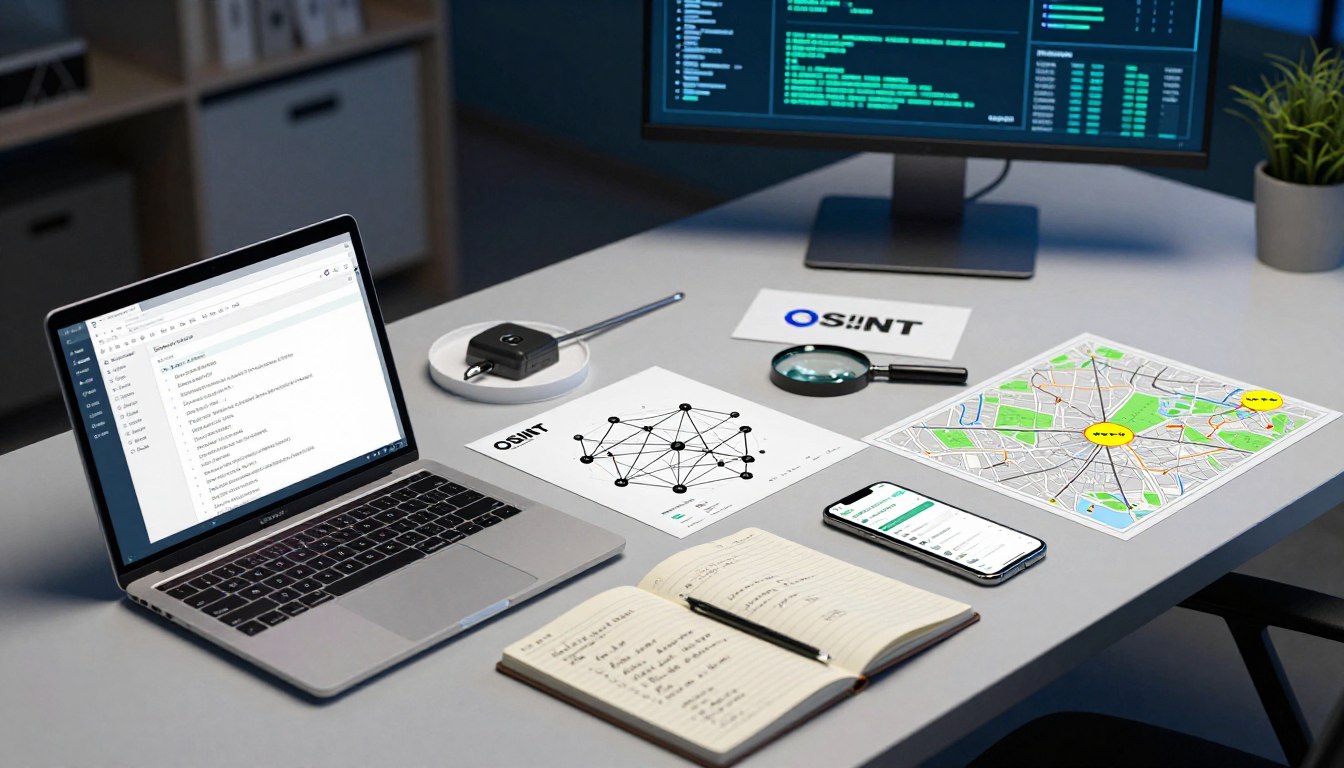
Using these OSINT tools, testers can find more vulnerabilities. This makes their tests better and more thorough.
Step-by-Step OSINT Process for Effective Penetration Testing
Using OSINT in penetration testing is easier with a step-by-step guide. This method helps testers gather, analyze, and use open-source intelligence. It makes their security checks better.
Step 1: Define Your Target and Scope
The first step is to know what you’re targeting. You need to pick specific parts of the organization to test. This makes your OSINT plan clear.
Step 2: Collect and Document Available Information
Next, gather all info about your target. Use tools like domain scanners and social media platforms. It’s key to collect and document well for a good OSINT analysis.
Step 3: Analyze and Correlate Intelligence
After gathering info, analyze and link it together. Look for patterns and weaknesses. Using advanced methods can help find important insights.
Step 4: Integrate OSINT Findings with Technical Assessments
Mixing OSINT with technical checks is vital. It makes your test more effective. This way, you get a full view of the organization’s security.
Step 5: Develop Attack Vectors Based on OSINT
The last step is to make attack plans based on OSINT. Create scenarios that use the found weaknesses. OSINT helps make tests more realistic, showing how strong defenses are.
By following these steps, testers can do a detailed and useful OSINT process. This improves their security checks a lot.
Advanced OSINT Integration: Threat Intelligence and SOC Analysis
Advanced OSINT integration is changing the game in penetration testing. It brings in threat intelligence and SOC analysis. This makes security assessments better by giving a deeper look at possible threats.
Leveraging Threat Intelligence in Penetration Testing
Threat intelligence is key in penetration testing. It gives insights into possible attacks and how attackers work. This helps testers make attacks more like real ones, making defenses stronger.
SOC Analysis Techniques for Enhanced Reconnaissance
SOC analysis looks at security event logs to spot security issues. Adding SOC analysis to OSINT makes reconnaissance better. It gives real-time info on an organization’s security.
OSINT Training and Certification Pathways
To use advanced OSINT, professionals can get special training and certifications. These programs improve skills in threat intelligence and SOC analysis. They keep testers up-to-date with the latest in cybersecurity.
Using advanced OSINT techniques, organizations can boost their penetration testing. This leads to better security overall.
Conclusion: Elevating Your Penetration Testing with Strategic OSINT
Penetration testing gets better with Open Source Intelligence (OSINT). It helps find weak spots and ways in. Cybersecurity experts use OSINT to make their tests more thorough.
OSINT makes testing more complete. It shows what’s online about a company and its risks. It’s key in finding secrets that hackers might use.
Using OSINT right makes tests better. This helps companies defend against cyber attacks. It’s all about being accurate and effective.
OSINT’s role in testing will keep growing. Keeping up with new OSINT methods is vital. It helps keep cybersecurity strong.